
July 28, 2026, 11:13
From the side beach to centre stage: how Cannes Lions became a creator economy event
Sam Chambers
By Sam Chambers | Webfluential Press
For seventy years, Cannes Lions has been at the heart of the advertising industry - it’s where storytellers and executives alike come together to decide what excellence means in advertising. It began in 1954 as a festival for cinema advertising, and for most of its history the Palais belonged to agencies: the creative directors, the film craft, the big-budget campaign of the year.
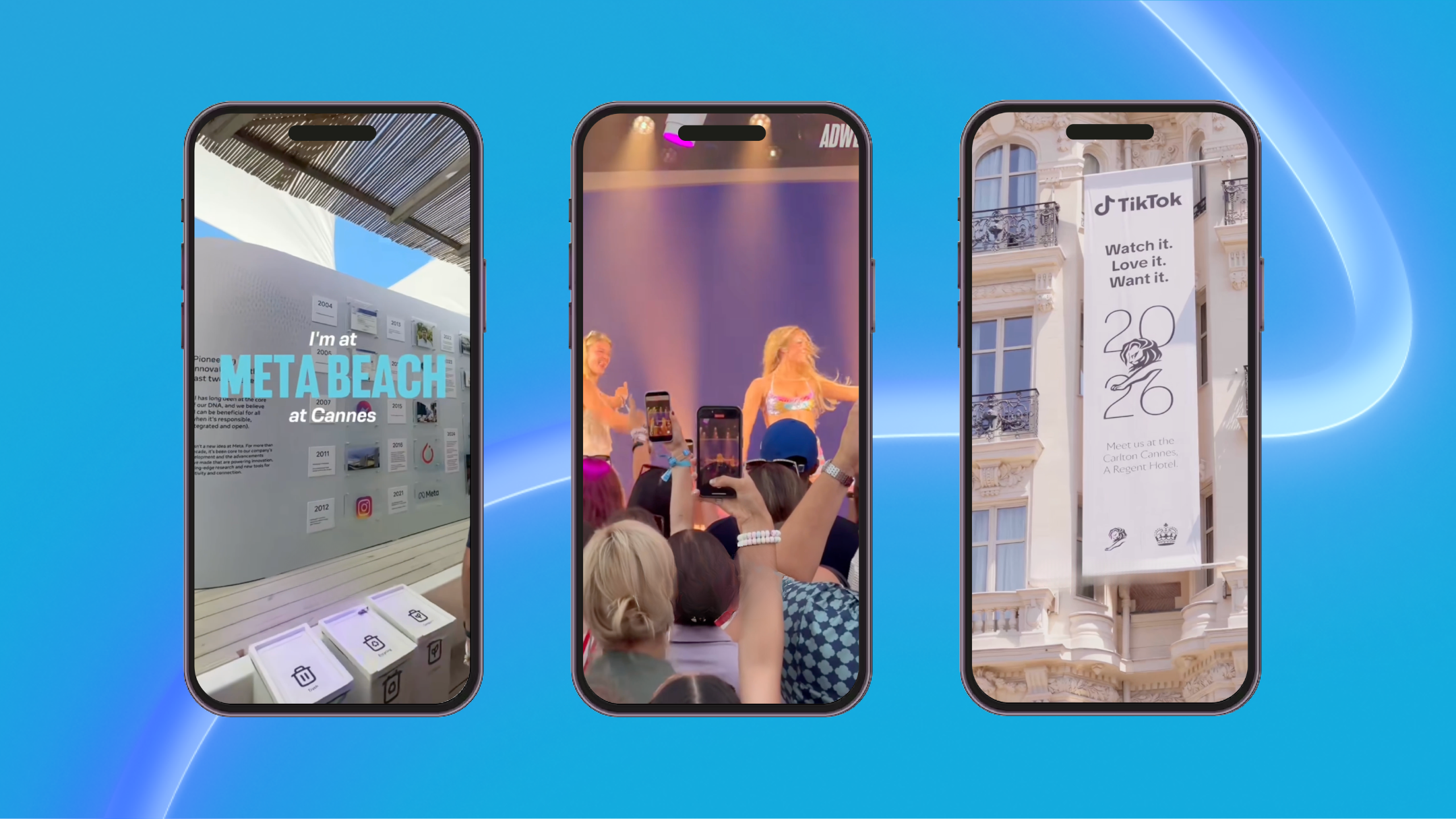
So it's worth pausing on what happened on the sunkissed promenade this June: An official creator hub sat on the beach directly behind the Palais, hosting more than 200 of the world's top creators. YouTube ran its first-ever Creator Club, complete with brand speed-dating. Meta threw a beach party catered by viral pastry chef Cedric Grolet. TikTok operated a nightclub. Spotify staged concerts. And the campaigns taking home the festival's biggest prizes weren't polished thirty-second films, they were creator-powered, participation-driven ideas.
The world's most prestigious advertising festival has, step by step, restructured itself around the creator economy. Here's how it happened, and what it tells us about where marketing is going in 2026.
The évolution, in four steps of a heel
2018: A category appears. Cannes Lions introduced the Social & Influencer Lions, the festival's first formal acknowledgement that influence had become a craft worth judging alongside film, print and outdoor. At the time, "influencer marketing" was still widely treated as an experimental line item and the awards category arrived before much respect from the industry.
2024: Creators get a seat at the table. The festival launched LIONS Creators, a dedicated forum bringing creators, brands, platforms and agencies together during Cannes week. The reasoning was commercial, not sentimental: Goldman Sachs had sized the creator economy at $250 billion, with projected growth to $480 billion by 2027. As Cannes Lions CEO Simon Cook put it, growth of that scale demanded that the festival "play a role in bringing together the platforms, the brands, the creators and the agencies."
2025: The language shifts. For its 72nd edition, the festival renamed the category Social & Creator Lions, retiring "influencer" in favour of "creator", and introduced a dedicated Creator Pass for festival access. The renaming matters more than it may seem. "Influencer" describes a media placement; "creator" describes an entrepreneur with a craft, an audience and a business.
2026: Centre stage. This year the creator presence stopped being a programme and became the gravitational centre of the festival. Beyond the activations and the beachfront hub, the proof was on the winners' podium. KitKat's "Heist" — in which 12 tons of KitKat bars "disappeared" before Easter — earned a 31% share of voice across 93 markets and $224 million in earned media value within ten days, with over 115 brands creating their own variations. It took the PR Grand Prix plus Gold Lions in Media, Social and Creator categories. Vaseline Originals, built with creators like Jen Chae and Lauren Luke around audience-invented product hacks, outsold Vaseline Jelly by 466%, at its peak selling one product every two seconds.
As Twitch's chief product officer Mike Minton summed it up at the festival: "The internet used to be about distribution. Increasingly, it's about participation."-
What the festival's evolution actually signals
When an institution as established as Cannes Lions reorganises itself around creators it’s confirming what we’ve been shouting about for decades, and three signals really stand out.
Creator marketing has moved from tactic to craft. The work winning Lions isn't "brand pays influencer to post." It's co-created, community-driven, built for participation; campaigns designed so audiences and creators complete them together. It’s a total 180 from the perception of ‘influencers as advertising space’ and it rewards brands who treat creators as creative partners rather than media inventory.
The measurement conversation has matured. A recurring theme across the festival's creator sessions was that follower counts and views are giving way to brand sentiment, audience trust and commercial outcomes as the metrics that matter. That's the same shift we've been championing across Africa, from vanity metrics to performance, and it's now the consensus position at the industry's highest table.
The economics are too large to sit on the side beach. From $250 billion in 2023 to a projected $480 billion by 2027, with some projections exceeding $600 billion by 2036, the creator economy now rivals the industries that built the Palais. Institutions are following the money and talent.
The view from Africa
Here's the part that matters most to us. The trajectory Cannes has followed-scepticism, then a category, then a seat at the table, then centre stage-is the same trajectory playing out in African markets right now, only faster. The African creator economy is growing at 28.5% a year toward a projected $17.8 billion by 2030. The brands winning Lions in 2026 are doing what the best African campaigns already do by necessity: building with creators who hold genuine trust in real communities.
The global industry has now validated what performance-driven creator marketing looks like. The opportunity for brands here is to skip the years of treating creators as an experiment and go straight to the model winning every award at the highest level.
The creators moved from the side beach to centre stage. The brands that move with them will be the ones on the podium next.
Join Webfluential and start growing your business
Subscribe to our newsletter for weekly insights on the creator economy.